

Literacy Development
Featured
What reading skills should my child have, and when?
Published on 7/10/2025
6 min read
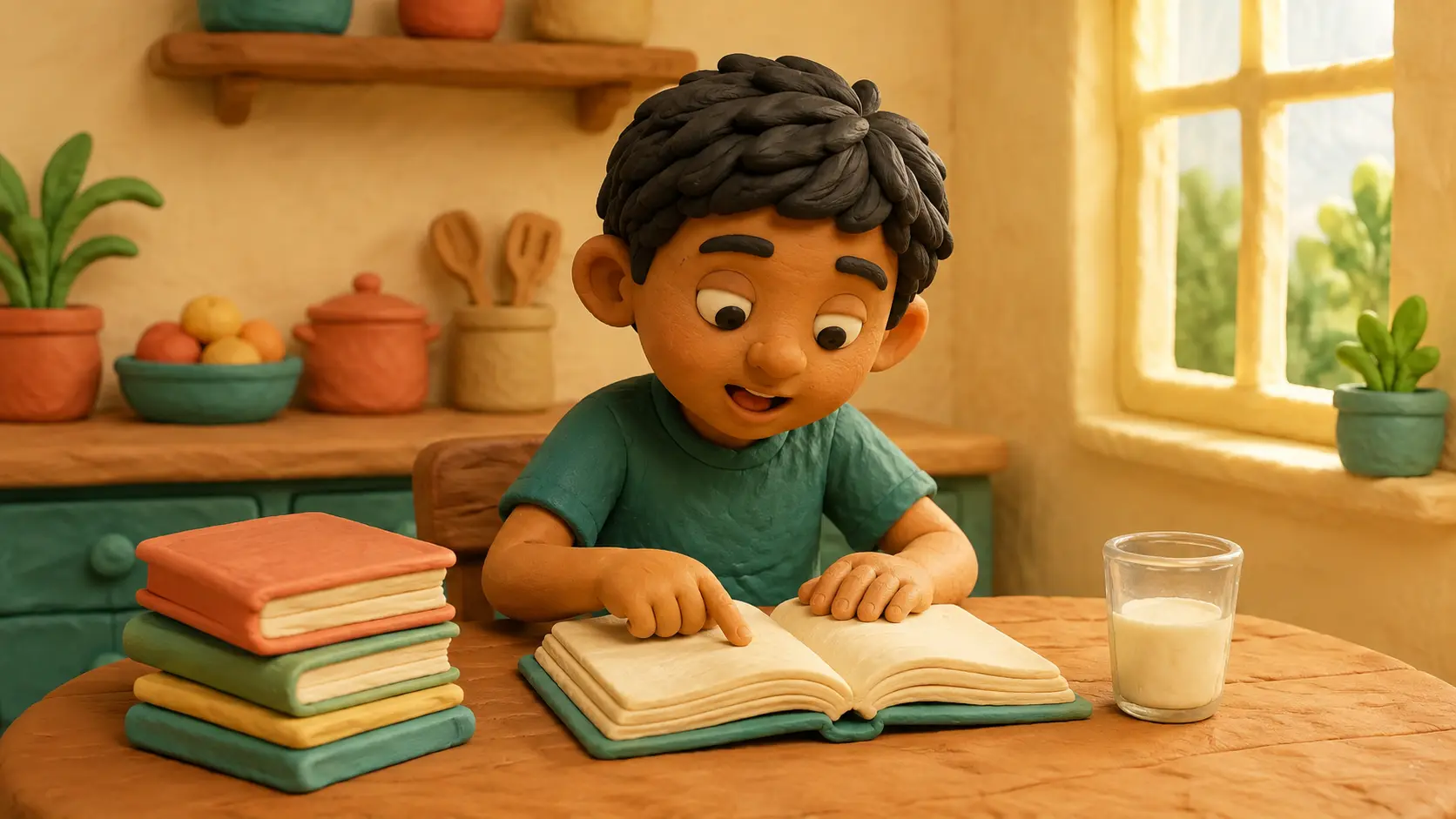
Reading looks like one thing from the outside. A child either reads or they don't. Underneath it is several separate skills that develop on different timetables, and knowing which one your child is actually stuck on saves an enormous amount of pointless practice.
The five things reading is made of
In 1997 the US Congress asked a panel of researchers to settle what actually works in reading instruction. The resulting National Reading Panel report (2000) landed on five components, and twenty-five years of argument later they have held up better than most things in education:
- Phonemic awareness — hearing that cat is made of three sounds. This is about ears, not letters.
- Phonics — knowing which letters make which sounds, and blending them.
- Fluency — reading smoothly enough that the effort stops showing.
- Vocabulary — knowing what the words mean.
- Comprehension — following, questioning and remembering what the text says.
Of these, phonics has the cleanest evidence behind it. The Education Endowment Foundation rates it as moderate impact for very low cost on very extensive evidence — around five additional months of progress for younger readers. If your child's school teaches systematic phonics, it is doing the well-evidenced thing.
What phonics does not do is make a child understand what they have decoded. That is a different problem, and it is the one that matters most for our readers.
What phonics does not do is make a child understand what they have decoded. That is a different problem, and it is the one that matters most for our readers.
What to expect, roughly, and when
Ages here are averages with very wide spreads. Two children a year apart on this table can end up in the same place by secondary school.
| Roughly | What is being built | What actually helps |
|---|---|---|
| 3–5 | Sounds, letters, how books work | Rhymes, songs, being read to daily |
| 5–7 | Decoding — letters to sounds to words | Systematic phonics, decodable books |
| 6–8 | Fluency — reading without visible effort | Re-reading easy books aloud |
| 7–10 | Vocabulary and background knowledge | Being read to above their own level |
| 9–12 | Comprehension — following and questioning | Talking about what they read |
Where children learning English quietly get stuck
Here is the pattern we see most often, and it is almost invisible from the outside.
A child learning English picks up decoding perfectly well. English spelling is irregular but learnable, and phonics instruction works regardless of home language. So by seven or eight they read aloud fluently, with good expression, and everybody relaxes.
Then comprehension quietly falls behind, because comprehension does not run on decoding. It runs on vocabulary and background knowledge, and those are exactly what a child gets less of in a language they did not grow up surrounded by. The EEF's reading comprehension strand is worth reading here: comprehension strategies help, but they cannot substitute for not knowing the words.
The tell is a child who reads a page beautifully and then cannot tell you what happened in it. If that is your child, more decoding practice is the wrong medicine. They need more words, which mostly means being read to and talked with, above the level they can read alone.
A child learning English picks up decoding perfectly well. English spelling is irregular but learnable, and phonics instruction works regardless of home language. So by seven or eight they read aloud fluently, with good expression, and everybody relaxes.
Then comprehension quietly falls behind, because comprehension does not run on decoding. It runs on vocabulary and background knowledge, and those are exactly what a child gets less of in a language they did not grow up surrounded by. The EEF's reading comprehension strand is worth reading here: comprehension strategies help, but they cannot substitute for not knowing the words.
The tell is a child who reads a page beautifully and then cannot tell you what happened in it. If that is your child, more decoding practice is the wrong medicine. They need more words, which mostly means being read to and talked with, above the level they can read alone.
What doesn't work
- Pushing the reading level up because they can decode it. Decoding a text and understanding it are different tests, and the second one is the one that counts.
- Vocabulary lists divorced from anything. Words learned in a list without a story around them do not stick, and the child knows they are being made to do homework.
- Treating a slow patch as a stall. Fluency in particular plateaus for months and then jumps. Six weeks of no visible progress is normal.
- Silent reading as the only practice. A child can skim silently and quietly learn nothing. Five minutes read aloud tells you more than an hour of silent reading.
When to worry, and when not to
Most of the variation on that table is ordinary, and being behind at six says very little about where a child lands at eleven.
Worth raising with the teacher: still not recognising common short words by sight at the end of the second school year; confusing similar-looking letters well past the start of the year; difficulty hearing rhyme or the separate sounds in a word at six or older; or reading that is accurate but so slow it exhausts them.
For bilingual children specifically, one distinction is worth holding on to: a gap in English vocabulary is not a reading difficulty. It is a vocabulary gap, it is expected, and it closes with exposure. A genuine decoding problem shows up in both languages — our guide to what actually helps a dyslexic reader goes into that distinction, and into which of the popular fixes have evidence behind them. That is a question worth asking before anybody reaches for a label.
Worth raising with the teacher: still not recognising common short words by sight at the end of the second school year; confusing similar-looking letters well past the start of the year; difficulty hearing rhyme or the separate sounds in a word at six or older; or reading that is accurate but so slow it exhausts them.
For bilingual children specifically, one distinction is worth holding on to: a gap in English vocabulary is not a reading difficulty. It is a vocabulary gap, it is expected, and it closes with exposure. A genuine decoding problem shows up in both languages — our guide to what actually helps a dyslexic reader goes into that distinction, and into which of the popular fixes have evidence behind them. That is a question worth asking before anybody reaches for a label.
A small note on StorySparkle
Where we fit on this table is narrow and deliberate. StorySparkle measures text difficulty on the SESL© scale so you can match a book to a reader rather than guess, and our stories are narrated in neutral UK English Received Pronunciation for the fluency and vocabulary stages.
We are not a phonics programme and we will not teach a child their letter sounds. If your child is at the 5-to-7 stage on that table, the school's phonics scheme and a set of decodable books are the right tools, and they are usually free from the school or the library.
If you want to check where a particular text sits, our reading level checker will tell you. And the habit underneath all of this is still reading together, which is the one thing on this page that works at every stage. If your child would rather invent stories than read them, writing their own pulls on the same skills from the other end.
We are not a phonics programme and we will not teach a child their letter sounds. If your child is at the 5-to-7 stage on that table, the school's phonics scheme and a set of decodable books are the right tools, and they are usually free from the school or the library.
If you want to check where a particular text sits, our reading level checker will tell you. And the habit underneath all of this is still reading together, which is the one thing on this page that works at every stage. If your child would rather invent stories than read them, writing their own pulls on the same skills from the other end.
One last thing
If you only take one thing from the table: work out whether your child's problem is getting the words off the page or knowing what they mean. Almost all wasted reading practice comes from treating the second problem with the first solution.
About the author
Written by StorySparkle's reading team — a group that includes qualified English language teachers and a specialist in second-language reading assessment, and which built the SESL© levelling scale behind our library. We write for families raising readers in more than one language.
Updated August 2026. Every study linked here was checked at the time of writing.
Updated August 2026. Every study linked here was checked at the time of writing.