


Does reading fiction make children kinder?
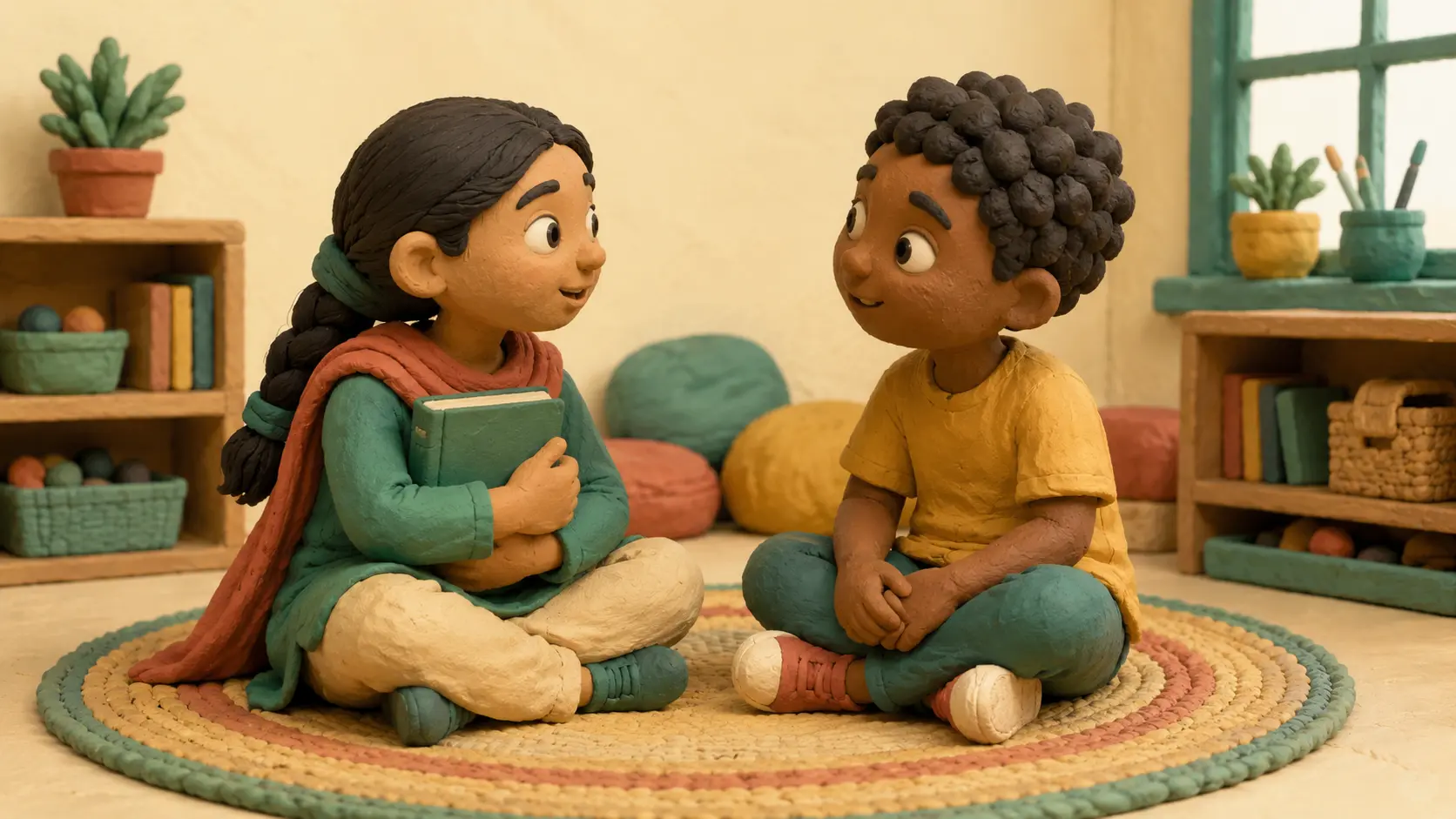
You have probably met the claim. Reading fiction makes you more empathetic — it was in the newspapers, it is in a thousand school newsletters, and it is the reason a lot of parents feel vaguely virtuous about a bedtime story. It is one of the most widely repeated findings in popular reading advice. It is also one of the shakiest, and the real story is more useful than the myth.
The study everybody quotes
It was a wonderful result: quick, clean, flattering to readers. It went everywhere.
Then people tried to repeat it. Panero and colleagues (2016) ran a large replication and found nothing. The original authors objected to how it was run, so the data were reanalysed the way they said was correct — and it still did not replicate. A separate replication published in Collabra also found no effect — and that one had committed to how it would analyse the results before collecting any, so the numbers could not be massaged afterwards.
This is worth sitting with for a moment, because the claim is still being repeated in reading materials sent home from schools. Nobody is lying. It is just that a striking early finding got into the culture faster than the failure to reproduce it did.
What the better evidence looks like
The stronger evidence comes from studies that run for months rather than minutes. In the trial by Grøver, Rydland, Gustafsson and Snow (2020) — 464 children learning a second language, across 60 preschools, with whole classrooms assigned at random either to the new approach or to carrying on as usual — classrooms doing structured, discussed shared reading on thematic content improved not only in vocabulary but in their ability to see a situation from somebody else's point of view. The effect was smaller than the vocabulary one, but real: the average child in those classrooms ended up ahead of about two-thirds of the children who did not get it.
Note what that intervention was. Not reading at children. Reading with them, on a theme, over time, with talk around it. The talk is not the packaging. It may well be the active ingredient.
So what does that mean for choosing books?
It means the theme is a way in, not a dose. A book about courage does not administer courage. It gives you and your child something specific to argue about on the sofa, which is where the work happens.
| Theme | What it gives a child | Worth asking afterwards |
|---|---|---|
| Fairness and rules | A first sense that rules are made by people, and can be wrong | Was that fair? Who decided it? |
| Courage | That being frightened and being brave happen at the same time, not one after the other | What was the hardest bit for them? |
| Friendship and falling out | That friendships break and can be repaired, which is not obvious at six | What would you have said to them? |
| Being the new one | Words for what it feels like to arrive somewhere you do not fit yet, and the knowledge that it passes | Have you ever felt like that? |
| Loss | A first encounter with grief at a safe distance — a pet, a grandparent, a friend who moves away — while nothing is actually happening to them | What do you think would have helped them? |
What doesn't work
- Books with the lesson on the cover. Children spot a moral being administered and stop listening. The lesson has to be discoverable, not announced.
- Reading and moving on. Without any conversation you are relying on the effect that failed to replicate. Two minutes of talk is the part with evidence behind it.
- Interrogating them about it. There is a difference between a question you are genuinely curious about and a comprehension check wearing a costume. Children can tell.
- Only choosing books that teach something. A child who is only ever handed improving literature learns that reading is a vegetable.
When to ease off
None of this means avoiding hard themes, which are often exactly why a book matters. It means reading it first if you are unsure, and being willing to stop. If your child goes quiet, changes the subject, or asks to read something else, that is information rather than resistance.
For a child learning English there is a second thing to watch: a theme that is emotionally right can still be linguistically out of reach, and struggling with the words will drown anything the story had to offer. When in doubt, drop the reading level and keep the theme.
A small note on StorySparkle
What we cannot supply is the conversation, and on the evidence above that is the part doing the work. A tagged library with nobody talking to the child is a filing system.
You can browse our themes collection, though a librarian asked the same question will do just as well and costs nothing. If you want the skills underneath the reading, our guide to what develops when covers those, and reading together remains the habit that makes all of it possible.
One last thing
Read the book. Then ask one question you do not already know the answer to. That is the whole method, and it is considerably better evidenced than the headline that got everyone excited in the first place.
About the author
Updated August 2026. Every study linked here was checked at the time of writing, including the ones that did not replicate.